
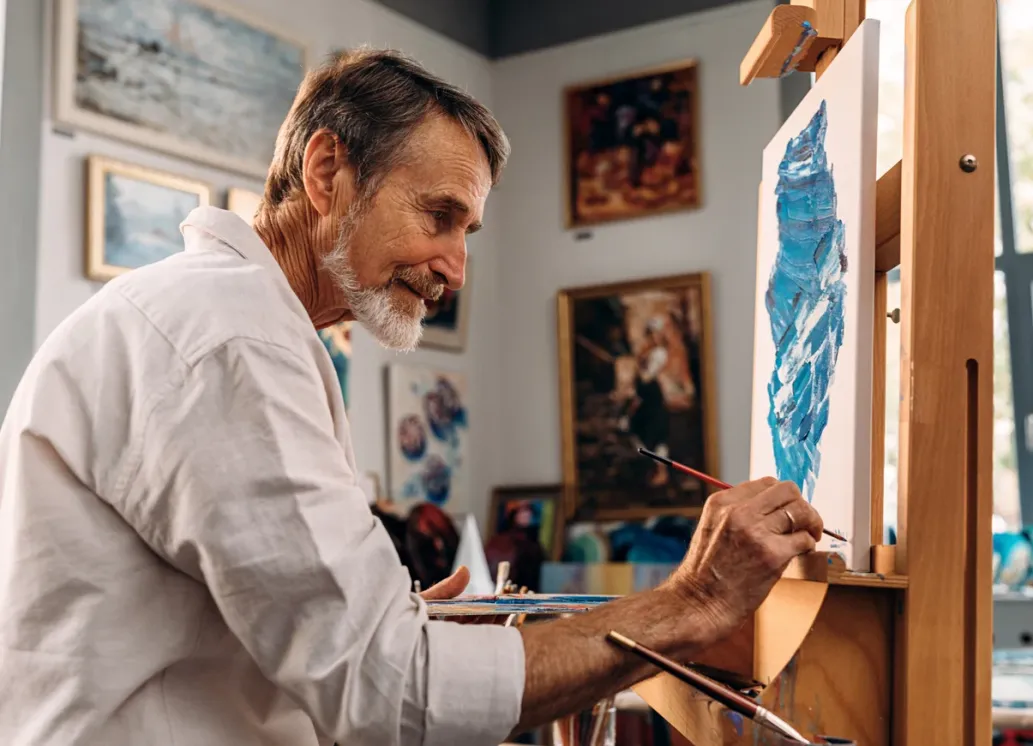
Quick Description: Research consistently shows that regular creative engagement—painting, music, writing, crafting—reduces anxiety and depression, improves cognitive function, and combats social isolation in older adults. This article showcases the impact of a creative lifestyle, types of artistic opportunities for seniors, and how senior living supports creativity, including The Bristal’s creative arts programming.
What’s a creative activity that brings you joy? Is there a piece of art that has moved you? Are you interested in finding your creative side in retirement?
A 2021 study from The National Institutes of Health (NIH) has shown that being creative makes you happier, but the benefits of engaging in the creative arts are much more encompassing. Let this insightful guide inspire you to pursue a creative lifestyle for the next phase of your journey.
The Benefits of a Creative Lifestyle
Research like the 2024 Frontiers study has shown incredible benefits of art for elderly populations, including:
- Lowered Cortisol: Just 45 minutes of creative work can significantly reduce stress hormone levels.
- Emotional Processing: Art provides a safe outlet to express complex feelings that are hard to put into words.
- Strengthened Problem-Solving Abilities: Imagination trains the brain to think outside the box and view challenges from new angles.
- Increased Focus: Routine creative practice builds mental discipline and healthy habits.
- Improved Confidence: Overcoming small creative hurdles builds pride and self-worth.
- Mood Enhancement: Eases symptoms of depression and anxiety by releasing feel-good neurochemicals like dopamine.
No special talents are required to experience these benefits. Even a few minutes of hands-on creativity, approached on one’s own terms, can positively influence mood and well-being throughout the day.
Creative Endeavors for Seniors
There are so many physical, intellectual, and mental health benefits of art seniors can enjoy regularly by exploring different forms of artistic expression, discovering new interests, and developing new skills.
Creative Activities
There are a variety of creative, intellectual, or art activities for seniors to explore or continue in retirement:
- Painting and drawing
- Attending local recreation classes
- Knitting, crocheting, quilting, and other fiber arts
- Cooking or baking classes
- Learning a new language
- Gardening in a container or the backyard
- Creative writing, journaling, or scrapbooking
- Singing or playing instruments
- Reciting poetry, performing plays, or improvising in local theater groups
Art Patronage
Art patronage is the financial, material, or political support that wealthy individuals, groups, or institutions give to artists. If seniors don’t participate directly in creative activities, they can also enjoy and discuss local art and culture, as well as engage in art patronage through:
- Financial Philanthropy: Joining museum and non-profit donor circles to fund local galleries, cultural centers, and emerging creators.
- Legacy and Commissioning: Directly supporting specific artists to create works that capture historical perspectives or personal narratives.
- Community Residencies: Participating in local city and state programs like Seniors Partnering with Artists Citywide (SPARC), The Creative Aging Arts Program, and The Watermill Center’s Artist Residency Program.
- Creative Aging Initiatives: Funding or joining programs that treat older adults as active makers and exhibitors of fine art.
Art Therapy
There is also art therapy for seniors, where people use the creative process to express emotions and improve overall well-being under the supervision of a trained professional. In art therapy, older adults can engage in activities like:
- Memory Painting: Creating art inspired by happy life stories or past events.
- Water-Activated Sheets: Using mess-free kits like Aquapaint where water reveals bright colors, ideal for memory care.
- Sensory Crafts: Working with soft clay, textured yarn, or making painted kindness rocks.
- Group Murals: Collaborating on a shared piece to build a sense of team purpose.
There is no one-size-fits-all when it comes to art, especially art therapy, which is why older adults utilize it for a variety of reasons:
- Relieving stress and processing grief in a healthy way
- A mode of communication if nonverbal or unsure how to express verbally
- A renewed or discovered sense of purpose
- Enhanced cognitive and intellectual stimulation
- Improved dexterity and newfound muscle memory
- Opportunities to bond with family or new friends
Whatever the reason someone turns to art therapy—working through grief, reconnecting with family, or simply finding a sense of calm—it can be incredibly beneficial for older adults.
Bridging Creative Activities and Memory Loss
Older adults with Alzheimer’s disease or dementia greatly benefit from a creative lifestyle full of intentional art activities for seniors with cognitive impairments. Such benefits include:
- Brain Stimulation: Art engages emotional and sensory parts of the brain, like the amygdala, that often stay healthy longer than verbal memory centers.
- Greater Recall and Neuroplasticity: Creative tasks help the brain form new connections, spark memories, and bridge communication gaps.
- Improved Mood: Focusing on a simple project can reduce stress, anxiety, and depression.
- Sense of Purpose: Completing a piece of art gives seniors a tangible sense of accomplishment and pride.
- Self-Expression: When words become hard to find, colors and shapes let seniors share their inner feelings.
- Lasting Connections: Group art classes encourage positive socialization and reduce feelings of loneliness.
- Enhanced Motor Skills: Working with brushes, clay, or textured materials helps preserve hand-eye coordination and fine motor strength.
How to Establish Creative Time For Those With Memory Loss
If you care for someone with memory loss, the first step to finding the right creative outlet for them is matching activities to their cognitive abilities:
- Early Stages: Projects can be more complex with multiple steps, such as scrapbooking or writing prompts.
- Middle Stages: Simplify projects with fewer choices, such as thematic paint-by-hues.
- Advanced Stages: Projects should focus on sensory-rich experiences with color, texture, and sound, such as music and finger painting.
The next step in choosing a compatible creative activity is by:
- Rekindling past interests and hobbies of theirs, such as gardening or singing.
- Adapting to their comfort level and physical ability, such as using large-handled brushes or choosing an activity they can do seated.
- Limiting the setup and rules of the activity to under 15 minutes to hold interest and prevent frustration.
Lastly, establish a relaxed environment that empowers them to be creative and comfortable with their activity:
- Have a designated space for the activity, such as the kitchen table for decorating cookies or a crafting corner in the guest room.
- Play soft background music or bring in pleasant scents to set a calm mood.
- Celebrate the simple things together beyond “finishing” the project, such as picking a favorite color or making up a dance move.
- Participate in the activity with them so they feel permitted and encouraged to engage, and so you can bond together.
Why Creativity Matters for Seniors
Having access to creative art opportunities and experiences is important for seniors in many ways:
- Post-retirement life transitions may lead to feelings of identity loss, but creative outlets provide a fresh vehicle for self-expression and personal validation.
- Group classes like choir, pottery, or painting circles naturally expand social circles and encourage community engagement.
- Creative activity offers a safe outlet to process grief, isolation, or difficult life changes.
- Regular creative production correlates with better preservation of memory, attention, and overall cognitive function.
- Expressive arts lower blood pressure and trigger the release of dopamine, reducing anxiety and depression.
- Nonverbal expression through art provides an outlet for feelings when verbal expression is difficult, or when language or speech is impaired by conditions like dementia, stroke, or Parkinson’s disease.
- Programs involving movement, dance, or sculpting can subtly improve motor skills, coordination, and physical activity levels.
- The brain can keep forming new neural pathways at any age when challenged with novel, creative tasks, improving neuroplasticity.
Creativity is more than an enjoyable pastime; it can help us stay engaged, express ourselves, and connect with the people around us at any stage of life.
How Senior Living Encourages Creativity
Senior living communities understand how creativity and aging well go hand in hand, which is why they often curate artistic opportunities for residents, such as:
- Personalized Environments: Residents are encouraged to decorate their living spaces and customize their daily routines to their unique lifestyles.
- Open Art Studios: Light-filled spaces for independent or guided creation.
- Community Art Shows: Galleries displaying resident artwork for families and local visitors.
- Visiting Artists: Guest instructors, cultural workshops, and accessible on-site performances from local artists.
- Creative Groups and Classes: Regularly scheduled painting, pottery, writing, and crafting workshops.
Creative Programming at The Bristal
At The Bristal, our approach to senior living is rooted in how we welcome, support, engage, and inspire people every day within our communities. The Bristal Experience is a thoughtfully curated lifestyle, deeply personal and continually evolving, grounded in the belief that the experience of living well can be elevated while honoring individuality, independence, and connection.
- Creative Arts Workshop: A specialized space that offers daily programming for artistic expression, such as the Creative Haven at The Bristal at York Avenue.
- The Cinema: A space where residents can enjoy classic and contemporary films, biographies, documentaries, and our signature lecture series.
- Lifestyle Coordinators and Art Therapists: Staff lead routine individual and group sessions designed to match residents’ cognitive and physical skill levels.
- Memory Care Integration: Tailored creative workshops, such as the music enrichment program, extend into Reflections, our dedicated memory care neighborhoods, supporting sensory engagement and self-expression.
- Resident Art Shows: Community-hosted local art exhibitions showcasing dozens of original pieces where family members and neighbors can celebrate resident works, such as the Annual Art Show at The Bristal at Jericho.
- Signature Immersive Programs: Themed events like 1950s music and culture days, complete with retro fashion corners, soda shop milkshake tastings, and memorabilia.
- Cultural Excursions: Recreational trips to external art galleries, museums, and local exhibits, or on-site themed cultural dining and events.
- Internal Inspiration: Creativity is encouraged at every level of The Bristal, including for our team members. We regularly host contests and competitions to inspire associates to think creatively, such as Taste of The Bristal: A Celebration of Culinary Creativity and Community.
And if you’re helping a parent or spouse find their creative footing, including someone living with memory loss, our lifestyle coordinators and art therapists are happy to talk through what that could look like. Are you ready to explore creativity and aging well? Contact us today to learn how our residents nurture lifelong pursuits and discover new passions.


