
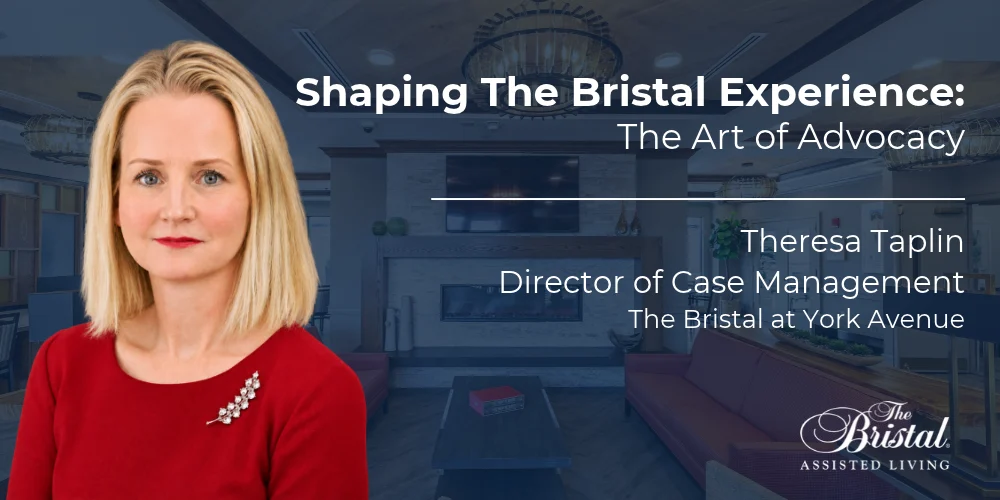
At The Bristal, the experience of care is shaped by more than the services a community provides. It is shaped by the advocacy efforts of people who take the time to listen, understand what matters to each resident, and help families navigate important transitions with confidence.
At The Bristal at York Avenue, Theresa Taplin, Director of Case Management, brings that commitment to life every day. Through thoughtful guidance, personal connection, and a deep understanding of each resident’s needs, she helps ensure that care reflects not only what a person needs, but who they are.
A Calling Rooted in Family
Theresa’s commitment to older adults began at home. Growing up with grandparents, great-aunts, and great-uncles gave her an early appreciation for older generations and the experiences, wisdom, and the stories they carry.
“For me, social work is a vocation, and my connection to older adults began long before my professional career,” Theresa explains.
A high school job with Adult Protective Services helped turn that personal connection into a professional calling. Working alongside caseworkers, she saw the importance of protecting older adults’ rights, responding to their needs, and advocating for their safety.
Theresa went on to earn a Master of Social Work from the University of South Carolina, focusing on gerontology and administration, deepening her understanding of the responsibility that comes with supporting others.
As Theresa recalls, her father Frank often said, “No one ever does it alone.” This lesson continues to inform how she approaches her work and the relationships she builds with residents, families, and colleagues.
A Career Built on Advocacy
Over more than 25 years, Theresa has worked across adult day care, skilled nursing social work, and home care administration. Each role broadened her perspective on how best to attend to the needs of older adults.
She began working at The Bristal at York Avenue, drawn by the opportunity to help shape a new assisted living community in New York City. The Bristal’s values aligned closely with her own, and she saw an opportunity to develop meaningful relationships with residents and families while helping shape the community from the ground up.
“Since joining, I have remained committed to finding thoughtful ways to enrich residents’ daily lives and support the people who love them,” Theresa says.
That commitment reflects The Bristal’s approach to leadership; taking responsibility, working collaboratively, and keeping residents’ needs at the center of decisions. Through her advocacy and partnership with colleagues, Theresa has become an integral part of shaping the experience residents and families have come to expect at communities throughout The Bristal Collection.
What Case Management Means at The Bristal
For Theresa, case management begins with getting to know each resident as a person; their preferences, routines, concerns, and the things that make life meaningful to them. She describes her role as “a guide, advocate, and coordinator,” helping connect residents with community services and healthcare providers.”
Suzanne, Regional Director of Healthcare, describes the Case Manager as “the person who ties everything together.” The role involves more than arranging services; it also requires anticipating needs, building relationships, and helping residents and families understand the options available to them. Suzanne sees these qualities in Theresa’s daily interactions. “She takes the time to get to know people. She truly cares and it shows every day.”
Suzanne notes that Theresa is always willing to have challenging conversations with family members, present options in an understandable way, and help them work through concerns without judgement.
For Theresa, the goal is to make sure residents and families feel informed, supported, and comfortable asking for help. As she puts it, “It is a privilege to become someone they can turn to and trust.”
Building Trust in the Early Weeks
For residents and their families, as they adjust to a new community, trust develops through consistent communication, practical support, and the knowledge that a community of caretakers is attending to those things that matter most to them.
“Sometimes reassurance comes through practical help; other times, it comes from taking the time to sit, listen, and acknowledge how someone is feeling,” Theresa explains.
That support evolves as residents settle into community life. Theresa helps coordinate services, accompanies residents to important medical appointments, and makes time for meaningful outings, including church services. These personal gestures reflect her understanding that well-being involves more than coordinating care; it also means helping residents maintain the relationships, routines, and interests that matter to them.
Laurie, Executive Director at The Bristal at York Avenue, sees the difference this approach makes. She regularly receives emails from residents and families expressing gratitude for Theresa’s responsiveness and willingness to help. Theresa also shares her cell phone number with residents and family members so they have a direct way to reach her for guidance or assistance. Her name consistently appears in resident and family member surveys as one of the things people value most about the community.
Theresa’s approach reflects The Bristal’s philosophy of care: building dependable relationships, understanding what matters to each resident, and ensuring that every person feels heard and supported.
Honoring a Resident’s Faith
Laurie recalls a resident whom Theresa accompanied to church every Sunday, from the day he moved into the community through his final days on hospice care. Theresa coordinated with members of his congregation to help ensure he could continue attending safely.
That commitment was about more than transportation or scheduling; it meant recognizing how important faith was to this resident and making every effort to preserve that connection through the end of his life. By working with his congregation and remaining attentive to his needs, Theresa helped him continue to stay actively engaged in his spirituality even as his circumstances changed.
This is advocacy in practice: listening to what matters to each person, finding ways to honor it, and working through the details to make it possible.
Values in Practice
Theresa’s work reflects The Bristal’s core values of integrity, enthusiasm, respect, collaboration, responsibility, and excellence.
Suzanne describes Theresa as someone who puts residents first and works closely with fellow directors for the good of the community.
“This kind of caring and dedication is not something that can be taught,” Suzanne says. “This is who she is down to her core.”
For Theresa, respect is central to her approach. “Respect means recognizing each resident as an individual with a lifetime of experiences, personal preferences, and the right to have a voice in decisions affecting their life,” she explains.
That perspective shapes the way she approaches each resident family member: not with a one-size-fits-all answer, but with a continued willingness to listen, understand individual needs, and work collaboratively toward the right support.
A Lasting Impact
Since The Bristal at York Avenue opened, Theresa has become a trusted partner to residents, family members, colleagues, and healthcare professionals. Laurie describes her as “a backbone of the community,” recognizing the consistency, accountability, and care she brings to her role. Rather than one defining moment, it is Theresa’s steady commitment to these responsibilities that makes a lasting difference.
Theresa is equally clear that this work depends on the people around her. “At The Bristal, I feel supported and valued, and I appreciate being part of a community where success depends on our collective effort,” she says. Working alongside colleagues with different skills and perspectives, she adds, continues to strengthen her own leadership capabilities.
Her experience reflects a broader principle of The Bristal Experience: meaningful relationships are built through collaboration, personal attention, and a shared commitment to treating each individual with dignity and respect. Through Theresa’s everyday advocacy, that philosophy becomes tangible, in the relationships she builds, the conversations she has, and the important details of residents’ lives that she helps them to maintain.


