
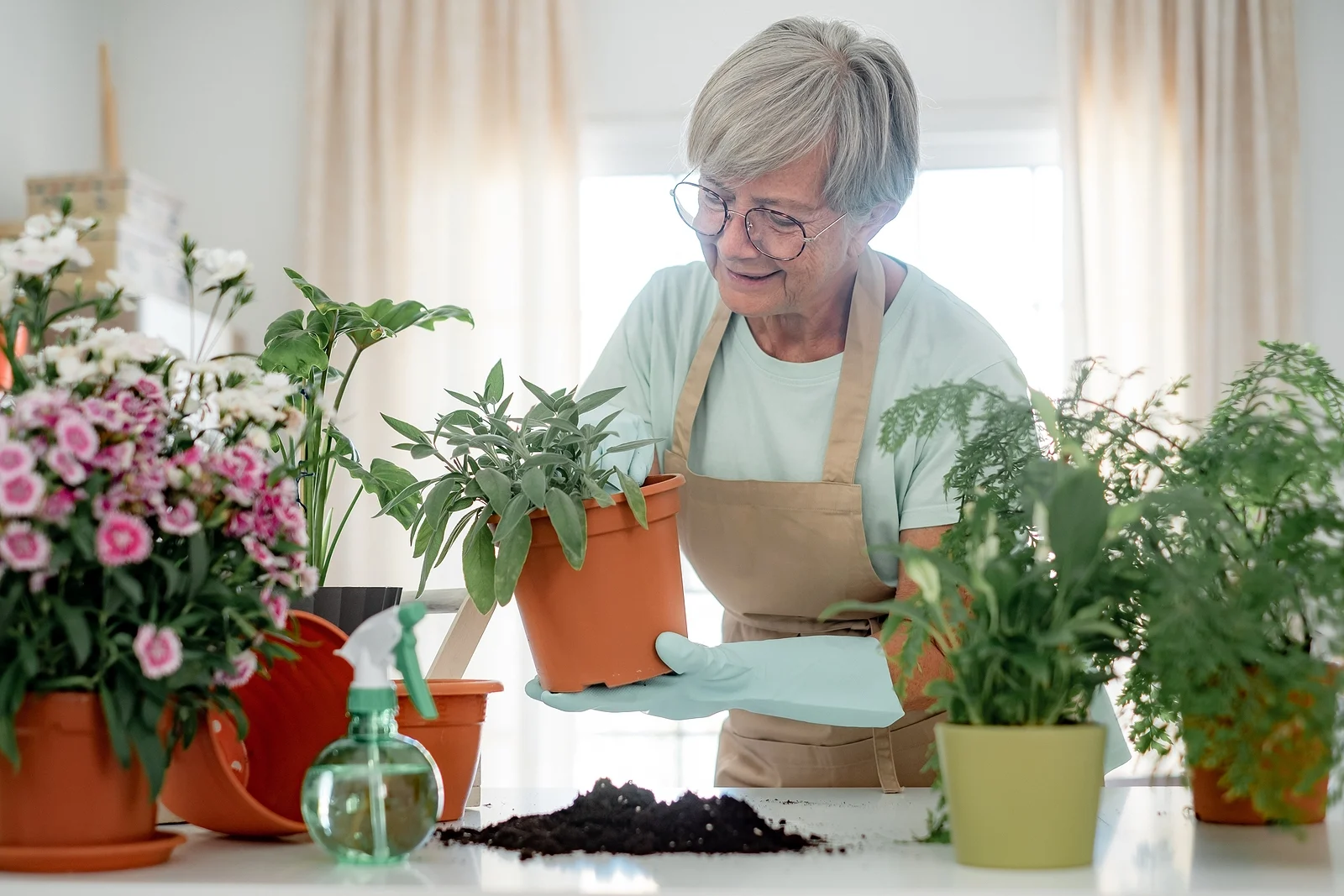
Quick Description: Indoor gardening is one of the most accessible and enriching hobbies for older adults in apartments or suites—no outdoor space required. From windowsill herb gardens and succulents to fast-growing microgreens and low-light houseplants, there are beautiful, easy ways to bring nature indoors and add purpose to everyday life.
There is something quietly extraordinary about watching something grow. A sprig of basil reaching toward a sunny window. A succulent settling into its terracotta pot. A cluster of herbs in a kitchen corner, ready to be pinched into a favorite dish. For older adults living in apartments or suites, indoor gardening offers a meaningful, tactile connection to the natural world—no backyard required.
At The Bristal Assisted Living, we believe that purposeful living looks different for everyone. For many residents, that purpose is found in the simple, grounding ritual of tending to plants. Whether you are just beginning to explore gardening indoors or you are a seasoned green thumb adapting to a new living space, there are beautiful ways to cultivate life and joy from the comfort of home.
Why Indoor Gardening Is a Natural Fit for Apartment Living
Gardening indoors is more accessible than most people expect. It requires no heavy equipment, no large outdoor plot, and very little maintenance once the right plants are chosen. Research published by the American Horticultural Therapy Association suggests that horticultural activities may support emotional well-being and cognitive engagement in older adults, with benefits that speak for themselves.
Beyond the science, there is something wonderfully personal about surrounding yourself with living things. Plants can soften a space, bring color to a room, and offer a gentle sense of routine. For those who have always loved spending time outside, indoor gardening activities for seniors may offer a way to continue that connection in a way that feels both safe and satisfying.
Getting Started: What You May Need
The good news is that beginning an indoor garden does not require much. A sunny windowsill, a few containers, quality potting mix, and a little curiosity are often all it takes. Before getting started, consider:
- Light: Most herbs and flowering plants prefer a south- or west-facing window with at least four to six hours of natural light per day. Grow lights can supplement during the winter months.
- Containers: Drainage is essential. Look for pots with drainage holes, or layer the bottom with pebbles to help prevent root rot.
- Soil: Use a quality indoor potting mix rather than outdoor garden soil, which can be too dense for containers.
- Watering: Overwatering is one of the most common challenges for indoor gardeners. Many plants prefer to dry out slightly between waterings.
Five Indoor Gardening Projects to Explore
For those in senior living communities, there are a few indoor gardening options that may pique your interest.
1. An Indoor Herb Garden
Of all indoor gardening projects, a kitchen herb garden may be the most rewarding. Fresh herbs bring fragrance, beauty, and culinary purpose to any space—a combination that is hard to beat.
Herbs like basil, parsley, chives, mint, and rosemary grow beautifully on a sunny windowsill with relatively little attention. A small row of terracotta pots, a long rectangular planter, or even a set of matching mason jars can be all that is needed to build a charming and functional indoor herb garden.
Indoor herb gardening also has a delightful practical dimension: the herbs are right there, ready to snip into a morning omelet or afternoon tea. That sense of usefulness, of tending something that gives back, can be deeply satisfying.
Best herbs to start with: Basil, mint, chives, parsley, thyme, and rosemary.
Tips for success: Herbs generally prefer four to six hours of sun per day and should be watered when the top inch of soil feels dry. Pinching off flower buds regularly encourages bushier, more flavorful growth.
2. Succulents and Cacti
For anyone who prefers a low-maintenance approach, succulents and cacti are an excellent place to begin. These resilient plants store water in their leaves and stems, meaning they thrive with a little benign neglect, a quality that makes them forgiving companions for indoor gardening.
Succulents come in a remarkable range of colors, textures, and shapes—from the rosette form of an echeveria to the trailing fronds of a string of pearls. Arranged in a shallow dish or tray, a collection of mixed succulents can become a beautiful living centerpiece for a coffee table or shelf.
Best varieties to start with: Echeveria, Haworthia, jade plant, aloe vera, and zebra cactus.
Tips for success: Succulents need bright, indirect light and very infrequent watering, roughly every two to three weeks. Well-draining soil and a pot with drainage holes are essential.
3. Windowsill Container Gardens
A windowsill can hold more than most people realize. With the right containers and plant selection, even a modest ledge can become a lush miniature garden.
Compact flowering plants like African violets, miniature roses, and begonias bloom beautifully in small containers and add vibrant color to any apartment or suite. Trailing plants like pothos and ivy can soften the edges of a shelf or windowsill and require very little attention.
Container gardening is especially well-suited to apartment living because it is entirely flexible—pots can be rearranged, swapped out with the seasons, or gifted to a friend when a plant outgrows its space.
Best plants to start with: African violets, pothos, philodendrons, peace lilies, and miniature roses.
Tips for success: Most flowering windowsill plants benefit from regular, gentle fertilizing during spring and summer. Deadheading spent blooms encourages continued flowering.
4. Microgreens
Microgreens are among the fastest-growing and most satisfying indoor gardening projects available. These young, edible greens—harvested just a week or two after germination—are nutritionally dense and remarkably easy to grow in shallow trays on a countertop or windowsill.
According to research from the U.S. Department of Agriculture, microgreens can contain significantly higher concentrations of vitamins and antioxidants than their mature counterparts, making them as practical as they are enjoyable to grow.
Sunflower, radish, pea shoots, and arugula are among the easiest varieties to start with. A simple kit from a garden center or online retailer can make the process approachable even for those who have never grown a plant before.
Tips for success: Microgreens need minimal soil depth (about an inch), consistent moisture, and a few hours of light each day. They are ready to harvest, simply snipped with scissors, in as little as seven to fourteen days.
5. Low-Light Houseplants for Cozy Spaces
Not every apartment or suite gets abundant natural light, and that is perfectly fine. A wide variety of beautiful houseplants thrive in lower-light conditions, making indoor gardening accessible regardless of window placement.
ZZ plants, snake plants, pothos, and heartleaf philodendrons are all excellent choices for rooms that do not receive direct sun. Peace lilies, which produce elegant white blooms, can thrive in indirect or filtered light and are among the most forgiving of indoor plants.
These plants may require less attention than sun-loving varieties, but they reward consistent care with steady, healthy growth, and a reminder that beauty can flourish even in quieter corners.
Tips for success: Avoid placing low-light plants in complete darkness; even indirect ambient light from a room is helpful. Water less frequently in lower-light conditions, as the soil will dry more slowly.
Indoor Gardening as Part of Purposeful Living
At The Bristal, we believe that the best days are ones filled with intention. Whether that means exploring a new recipe with fresh herbs from a windowsill garden, pausing to admire a blooming African violet, or simply having something living to care for each morning—indoor gardening has a way of quietly enriching everyday life.
Our signature programs and daily offerings are designed with exactly that spirit in mind: fostering curiosity, encouraging engagement, and celebrating the individuality of every resident. If indoor gardening is something you or someone you care about has always loved, or is eager to try, we would be glad to talk about how our communities may be able to support that passion.
To learn more about life at The Bristal Assisted Living, contact us or find a community near you.
Frequently Asked Questions
What are the best indoor gardening ideas for seniors in apartments?
Some of the best indoor gardening projects for older adults in apartments include windowsill herb gardens, low-maintenance succulents, compact flowering plants in containers, fast-growing microgreens, and low-light houseplants like pothos or snake plants. These options require minimal space, little equipment, and can be adapted to suit a wide range of ability levels.
What plants are easiest for indoor herb gardening?
For indoor herb gardening, the easiest plants to start with are basil, mint, chives, parsley, thyme, and rosemary. These herbs grow well in small pots on a sunny windowsill with four to six hours of natural light per day and relatively infrequent watering.
Is gardening indoors good for older adults?
Yes—gardening indoors may offer meaningful benefits for older adults, including a sense of purpose, a gentle daily routine, and a connection to the natural world. The American Horticultural Therapy Association recognizes horticultural activities as supportive of emotional well-being and cognitive engagement. It is always a good idea to speak with a healthcare professional about any new physical activity.
What indoor gardening activities are good for seniors?
Indoor gardening activities for seniors include tending a windowsill herb garden, arranging and caring for succulents, growing microgreens in shallow trays, and maintaining low-light houseplants. These activities are tactile, calming, and easy to scale to individual interests and abilities.
Can you have a garden in a senior living apartment?
Absolutely. Indoor gardening is well-suited to apartment and suite living. Container gardens, herb pots, succulent arrangements, and microgreen trays require no outdoor space and can thrive on a windowsill, countertop, or shelf. Many senior living communities, including The Bristal Assisted Living, encourage residents to personalize their spaces and pursue their hobbies.
What is the easiest indoor plant for a senior with limited mobility?
Succulents, snake plants, ZZ plants, and pothos are among the easiest indoor plants to care for with limited mobility. They require infrequent watering, tolerate a range of light conditions, and need very little maintenance, making them ideal companions for anyone who wants the beauty of a plant without demanding upkeep.