
September is National Healthy Aging Month, an annual observance that encourages people to take an active role in their health and well-being as they age. At The Bristal, that philosophy extends well beyond a single month on the calendar.
Healthy aging is central to the way we approach life at The Bristal. From fitness and wellness programs, to nutritious dining options, to opportunities for social connection, lifelong learning, and meaningful engagement, residents are encouraged to remain active participants in their own well-being. Just as importantly, those opportunities are designed to meet people where they are, recognizing that healthy aging looks different for everyone.
One of the people helping bring that philosophy to life at The Bristal at York Avenue is fitness and wellness expert Roberta Bergman. Known as the “Leading Lady of Back Wellness,” Roberta is the author of Back on Track: The Lifestyle and Exercise Guide on Healing Back Pain and the founder of Bodyformula, an integrative health, fitness, and wellness program.
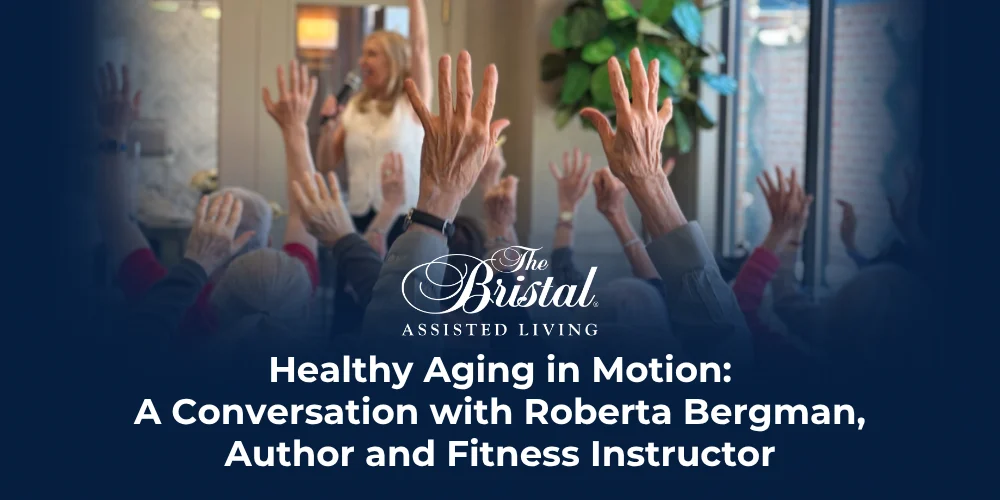
Roberta recently shared her expertise with York Avenue residents during a presentation on back wellness. We spoke with her about mobility and what it means to stay active at every age.
What does healthy aging mean to you?
Roberta: It’s never too late to get into shape! Exercise at any stage of your life but accommodate your physical limitations. You are never too old to get into better physical condition.
Some adult children with good intentions will discourage their aging parents, with comments such as “take it slow” or “don’t overdo exercise.” That advice can be discouraging to someone who is trying to move but must discover the particular forms of movement they can do.
During my exercise classes with older adults, I safely use soft balls, resistance bands, and light weights to try to put people through the ranges of motion needed to improve mobility, flexibility, and strength. Even people in their 90s can continue to make physical progress.
What are some of the most important lessons you shared with residents about staying mobile as they age?
Roberta: Back pain is a common concern as we age. Eight out of ten people will have back pain at some point in their life. Once people realize they have some control over the severity and frequency of back pain, they can learn to prevent the most common causes.
Most important is improving posture; the seated posture, standing posture, and lying posture are important to correct. Awareness is key!
Static positions are the precursors of back pain. It’s important to change positions even while sitting in a chair. Chair exercise helps introduce new patterns of movement for those with physical limitations or sitting in a chair for many hours each day.
Keep moving as we age, rather than avoiding moving too much. Simply finding the right form of movement with modifications is essential.
Your approach to movement is clearly shaped by your experience. What inspired you to write Back on Track?
Roberta: I was inspired to write my book Back on Track: The Lifestyle & Exercise Guide on Healing Back Pain for many reasons. I was providing exercise classes for conference registrants of The American Back Society, physicians and healthcare practitioners, many of whom gathered from all the world. They met two times a year to discuss all aspects of back pain.
I had been a fitness instructor my entire adult life. In addition, I completed a Master of Science in Movement Therapy. The more I learned about alternative body therapies, medically safe exercise, and the benefits of water therapy, I realized that not many medical professionals focused on preventing and healing back pain through movement.
After working with The American Back Society, I received 200 hours of continuing medical education and realized it was my calling to write a book about the benefits of helping people improve their lifestyles by selecting the proper exercise suitable for people as they age.
My hope is that readers use my book as a guide for a routine movement/exercise that they can do despite any physical condition or limitation.
What have you found most rewarding about bringing that philosophy to your classes at The Bristal?
Roberta: When I work with people for a long period of time, I create a personal connection to them. It’s a sense of belonging which works both ways.
On my part, I try to impress upon the residents that any amount of movement they do is beneficial, even if it is miniscule and limited. I praise their progress, and I am enthusiastic when I see someone who struggles with their range of motion or strength attempting to modify movement.
Many people are unable to participate fully in class [when they begin], yet they do a little better during each portion of the class over time. I break the class into four parts in order for them to choose from a variety of movement forms.
It is very gratifying to me to watch people move comfortably. I know the residents understand my points as they return with discipline each week.
How did your relationship with The Bristal begin?
Roberta: The Bristal is just beautiful, and the team members are warm. It seemed like a perfect fit for my back and lifestyle wellness engagements. The Lifestyle Director was enthusiastic about having residents exercise regularly, so we scheduled our first session.
I felt at home with the residents from the beginning, and I especially enjoy working with older adults. It helps that I’m married to a man 18 years my senior!
Looking ahead, how would you like to expand your work in wellness?
Roberta: I am currently in the planning stages of pre-production on a Resident Wellness Initiative, where my exercise classes could be projected onto a video screen and shown at all of The Bristal communities. It could improve participation, health outcomes, and quality of life.
There are several programs in the works, and each program includes chair exercise, flexibility, strength training, balance, breathing, and relaxation.
Also, in its early conceptual stages, my next book aims to focus on the Mind/Body Connection: Align Your Body & Your Mind – how your mental attitude and your physical aptitude affect your health and healing.
If you could leave our residents and their families with one message, what would it be?
Roberta: Exercise is Medicine! Doing a few minutes of exercise each day improves mobility, decreases back and neck pain, strengthens weak muscles, and stretches tight ones. This helps to reduce fatigue throughout the day, creates a positive attitude, and improves the mood in general.


