

Quick Description: Moving a parent to memory care is an impactful decision for families, but they don’t always know which strategies can make the move easier for everyone. Readers will feel empowered to continue taking the best steps for their loved one living with dementia with insightful transition tips, such as visiting and talking about the memory care community beforehand and how to make their new residence feel familiar and comfortable.
Living in a memory care community can substantially improve the quality of life of an older adult living with dementia or other forms of cognitive impairment and also create peace of mind for caregivers and family members. Unfortunately, the transition to memory care, whether from a lifelong home or from an assisted living community, can be incredibly emotional and somewhat challenging for everyone involved.
When the time comes, it’s a complicated conversation to have and potentially a stressful decision to make. Reducing the tension associated with moving to a new place and receiving a higher level of care is likely a priority. Follow these tips for how to minimize any unnecessary discomfort with transitioning to memory care.
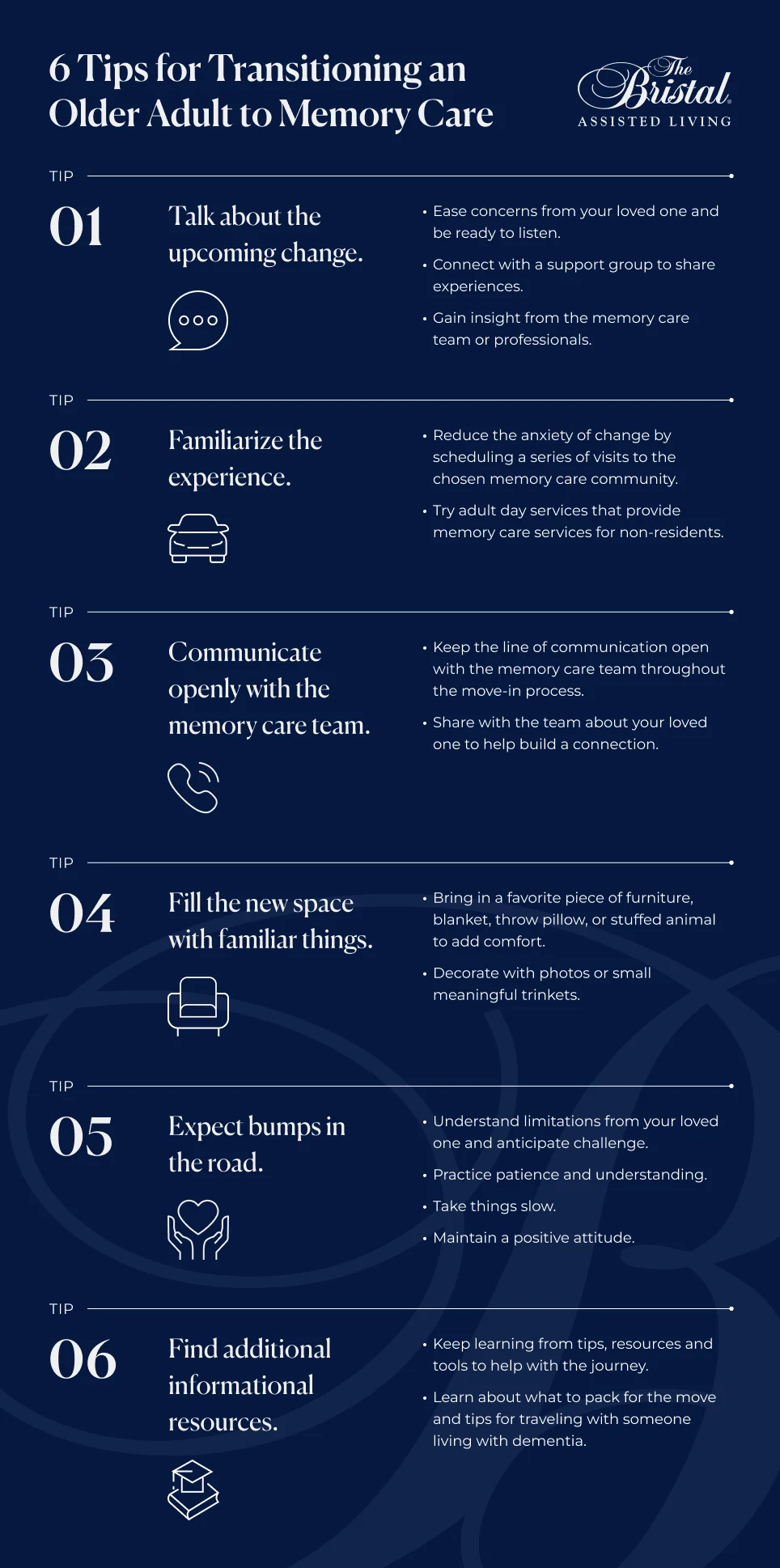
1. Talk About the Upcoming Change
As you begin the conversation about a potential upcoming move, try to anticipate concerns that your aging friend or family member may have, and be ready to listen with an open mind. Encourage them to share their thoughts, feelings, and experiences and to ask whatever might be important in the moment and at any point in the process.
Active listening can lessen any anxiety they may be experiencing and lead to less confusion and fewer incorrect assumptions about the reasons for the move and what their next chapter could be. Reassure them that you will be there to support them every step of the way.
Joining a support group geared toward both older adults living with dementia and their families and friends can be a helpful way to connect with others in similar life transitions. This type of support group is commonly referred to as a memory café and can enhance coping skills in a safe, socially engaging environment with people who genuinely understand and care.
The memory care community team includes highly trained professionals that support families in similar situations on a daily basis. You can also connect with professional counselors or social workers who specialize in working with older adults. Professionals can offer valuable strategies to make the transition easier, including teaching relaxation techniques if your friend or family member becomes anxious.
2. Visit Frequently or Try a Respite Care Stay or Adult Day Care Service
One way to help reduce the anxiety your loved one may be experiencing is to schedule a series of visits with the memory care community you have chosen. This helps them become familiar with the new environment and meet the team members and other residents.
Some communities also offer respite care or adult day care services, providing temporary relief for family caregivers while giving their loved one full access to care services, meals, and 24-hour supervision.
At The Bristal, we encourage visitors to tour our communities, attend events, and get to know team members and potential new neighbors.
3. Communicate Openly with the Memory Care Team
Meet with team members and ask a lot of questions to find the memory care community that is the best fit. Then, it’s essential to keep the conversation going throughout the move-in process. Keep an open line of communication with the memory care team so they can assist you in making the transition as smooth as possible.
Most memory care communities ask families to provide detailed information about the resident before the move, including their likes, dislikes, interests, hobbies, and what makes them unique.
Consider sharing the following information with the memory care team:
- Their profession before retirement.
- Their favorite music genres.
- Their current daily routine, including the times when they are most engaged.
- Their current interests and hobbies, as well as past hobbies they enjoyed.
- Things that help them feel calm and secure.
The more detailed information you provide, the easier it is for team members to build lasting connections with your loved one and ease their transition to memory care.
4. Fill Their New Space with Familiar Things
When transitioning to memory care, it’s important to pack well and make the new environment feel like home for the individual. To achieve this, you can:
- Bring in a favorite piece of furniture, such as a chair or small table.
- Decorate the room with photos of family and friends, or bring along old photo albums.
- Place familiar, small items or meaningful trinkets in the living space.
- Bring a favorite blanket, throw pillow, or stuffed animal to make their living space comfortable and familiar.
5. Expect Bumps in the Road
It’s tough to make changes at any age, but it can be especially challenging for those living with dementia. Seniors experiencing cognitive decline may go through a range of behavioral and mood-related symptoms during transitions like moving. They might become more irritable, anxious, or agitated.
The memory care community team is committed to ensuring the safety, quality of life, and overall well-being of residents in their care. They will provide support to both you and your loved one during this significant life change.
Understanding your friend or family member’s limitations and anticipating challenges will better prepare you to respond with patience and understanding when difficulties arise. Taking things slowly will give your loved one ample time to adjust, and maintaining a positive attitude will help reassure them during the move.
6. Plan Visits Thoughtfully
Planning visits thoughtfully after transitioning to memory care makes your loved one feel secure, reduces agitation, and supports their adjustment to a new environment.
- Coordinate With the Team: Talk to the memory care team about when they are most alert or calm, and follow their guidance on visit frequency during the first few weeks of adjustment.
- Visit Around Daily Rhythms: Schedule visits during times when your family member has more energy or is less prone to sundowning, or late-day confusion and fatigue.
- Keep Initial Visits and Goodbyes Short: Plan brief, high-quality visits for 30-45 minutes at first, extending the time only as they settle in. When saying goodbye, offer a reassuring hug and a calm statement that you will see them again soon.
- Avoid Early Outings: Refrain from taking them out of the memory care community during the first couple of weeks to prevent disorientation or resistance when returning.
- Create Positive Associations: Arrive with a small gift or a treasured delicacy to make the experience feel comforting and joyful.
- Focus on Simple Activities: Bring low-stress activities to share, such as looking through a familiar photo album, listening to favorite music, or working on an easy puzzle together.
- Maintain a Calm Demeanor: Speak in a soft, reassuring tone, and avoid correcting or arguing if they experience confusion or repeat stories.
Find More Memory Care Resources at The Bristal
At The Bristal, we understand the sensitive subject of moving a parent to memory care. When caring for someone with memory loss, it’s natural to find yourself reflecting on how best to support them and how to balance your desire to help with respect for their independence. You can find more resources on our memory care page complete with blogs and FAQs, or learn more about understanding memory loss if your loved one is in very early stages.
Finding the right memory care community is a top priority for your family, and we want to support you on your journey. Contact us today to learn more about our memory care neighborhoods and how we’re there for families every step of the way.
At The Bristal, we believe that transparency is important and that language matters. We use person-first language whenever possible to honor the dignity of people living with dementia. To reach those actively searching for information, we occasionally include commonly searched terminology that is less person-driven. This choice supports accessibility and discoverability, but does not reflect our philosophy of care.
This blog was originally published in July 2024 and updated in September 2026.