
Quick Description: This guide helps seniors and their families understand the meaningful differences between retirement communities and nursing homes—covering levels of care, lifestyle, independence, staffing, programming, and cost—so they can make a confident, informed decision about the right path forward.
When exploring senior living options for yourself or someone in your care, one of the first questions that tends to come up is deceptively simple: What’s the difference between a retirement community and a nursing home?
Both serve older adults, but that’s where the similarity largely ends. Understanding the distinction in terms of lifestyle, level of care, community, and cost, can make all the difference in finding the right fit.
At The Bristal, we know that this distinction is critical for families. Let’s break down the differences.
Two Very Different Philosophies of Care
At their core, retirement communities and nursing homes reflect two distinct approaches to aging and care. So let’s explore nursing home vs retirement community differences.
A nursing home, more formally known as a skilled nursing facility (SNF), is a medical care setting designed for individuals who require around-the-clock clinical attention following a hospitalization, surgery, or significant health event, or those managing serious ongoing medical needs.
Staffing typically includes registered nurses and licensed practical nurses on duty at all times, with physicians making regular visits. The emphasis is on medical treatment, rehabilitation, and close health monitoring. Nursing home stays may be short-term (rehabilitative) or long-term, depending on the needs of the individual.
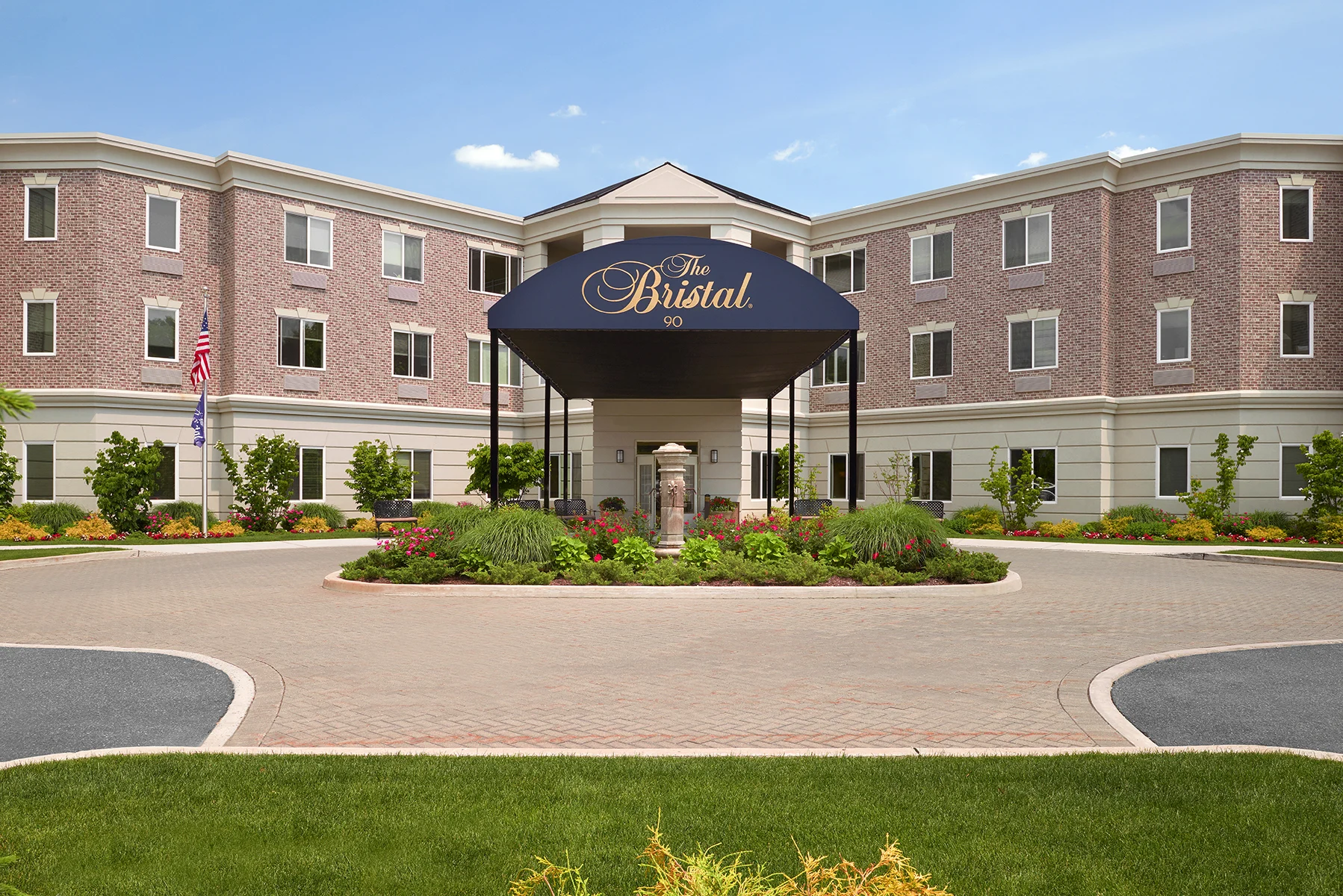
Retirement communities, on the other hand, are built around lifestyle—purposeful living, engagement, connection, and well-being. These communities may offer a spectrum of support, from fully independent day-to-day living to assisted living with personalized care services. The focus is not on medical treatment but on enriching daily life, maintaining independence where possible, and building meaningful relationships within a vibrant community. At The Bristal, we offer an independent lifestyle with the benefits and services of assisted living.
Levels of Care: What Each Setting Offers
One of the most important distinctions lies in the type of care and support provided.
Nursing homes are equipped to manage complex, ongoing medical needs, such as wound care, ventilator support, IV therapy, physical and occupational rehabilitation, and more. They are licensed and regulated as medical facilities.
Retirement and assisted living communities, like those communities in The Bristal Collection, provide support for activities of daily living (ADLs), such as bathing, dressing, grooming, and medication management, as well as wellness programming, dining, and social engagement. Care is personalized to each resident, but it is not clinical care. If a resident has acute medical needs, the appropriate medical professionals would be consulted.
Within the senior living landscape, you may also encounter memory care—a specialized neighborhood within a retirement community designed to support those living with Alzheimer’s or other forms of dementia. At The Bristal, this is known as the Reflections neighborhood, where a dedicated team and thoughtfully designed environment help residents thrive each day.

Lifestyle and Daily Experience
This is where the two settings diverge most visibly.
In a nursing home, daily life centers around health management. Rooms tend to be functional rather than residential, schedules are structured around care routines, and social programming, while often present, is secondary to medical priorities.
In a retirement community or assisted living setting, lifestyle is the centerpiece. Residents may enjoy chef-prepared meals in a country club-style dining room, access robust programming across cultural, intellectual, and wellness dimensions, take advantage of beautifully appointed common spaces, and build genuine friendships. The community itself is designed to feel like home—a warm, engaging environment where residents can pursue their interests, discover new ones, and live on their own terms.
At The Bristal, for example, residents have access to multiple programs a day, which is significantly more than most communities typically offer. From fitness classes and cultural studies to cooking demonstrations and social events, the lifestyle emphasis is on engagement, enrichment, and a life well lived.
Independence and Individuality
Retirement communities are designed to celebrate what residents can do and help them continue to do it. Assistance is available, but so is the freedom to set your own pace, pursue your passions, and maintain your sense of self.
Nursing homes, by contrast, are structured environments where medical necessity often governs the daily rhythm. Privacy, autonomy, and personal choice—while valued by caring staff—are naturally more constrained in a clinical setting.
A Note on Cost
Both settings involve significant financial consideration, and costs vary based on location, level of care, and the specific community or facility.
Nursing homes tend to have higher daily rates due to clinical staffing requirements and the intensity of care provided. Some stays are covered in part by Medicare (particularly short-term rehabilitative stays) or Medicaid for those who qualify. Long-term nursing home costs are substantial and may be funded through personal resources, long-term care insurance, or Medicaid planning.
Retirement and assisted living communities typically operate on a monthly basis, with fees that may vary based on the type of suite or apartment, the level of personalized care selected, and the amenities and programming at the community. Most assisted living is funded privately, though long-term care insurance may help offset costs. It is always advisable to consult with a financial advisor or elder law attorney to understand the full range of funding options available.
How to Know Which Is the Right Fit
The decision ultimately comes down to the health status, daily support needs, and personal priorities of each individual resident.
If an individual requires skilled nursing, ongoing rehabilitation following a hospitalization, or complex medical management, a nursing home or short-term rehabilitative care setting may be the right choice—at least temporarily.
If an individual would benefit from some assistance with daily tasks, greater safety and peace of mind, connection to a vibrant community, and enriching programming while continuing to live life fully, an assisted living or memory care community may be a much more fitting and fulfilling option. Assisted living can also be the perfect short-term option when transitioning from a rehabilitation or hospital setting.
The best conversations about senior living start with an honest assessment of needs and a clear-eyed look at what kind of daily experience the individual deserves.
Exploring The Bristal
The Bristal Assisted Living has been serving the New York metropolitan area for more than 25 years, with communities across New York and New Jersey. Each community offers assisted living and a Reflections memory care neighborhood within a warm, elegantly appointed setting. We invite you to explore what life at The Bristal looks like and to reach out whenever you’re ready to talk.
FAQs
Can someone move from a retirement community to a nursing home if their needs increase?
Yes. Many seniors transition between settings as their care needs evolve. Assisted living communities may be able to adjust care levels over time, but if medical needs become complex enough to require skilled nursing, a transition to a nursing home or other clinical setting may be appropriate. A physician and care team can help guide that decision.
Is assisted living the same as a nursing home?
No. Assisted living communities provide support with daily tasks and offer rich lifestyle programming, but they are not medical facilities. Nursing homes (skilled nursing facilities) are licensed for clinical care, including rehabilitation and complex medical management.
Does Medicare cover retirement communities or assisted living?
Generally, Medicare does not cover assisted living or retirement community costs. Medicare may cover short-term skilled nursing or rehabilitative care under specific conditions. It is advisable to consult with a financial advisor or elder law attorney for personalized guidance.
What is memory care, and is it different from a nursing home?
Memory care is a specialized neighborhood within a senior living community designed to support those living with Alzheimer’s disease and other forms of dementia. It is distinct from a nursing home. Memory care communities focus on safety, engagement, and quality of life in a residential (rather than clinical) setting. At The Bristal, memory care takes place within the Reflections neighborhood.